
How to Spot BookTok Romance Hype

How to Spot BookTok Romance Hype
That moment when a BookTok video promises a life-altering romance, the comments are full of sobbing emojis, and suddenly you're one click away from buying a book you know almost nothing about - yes, this is exactly why knowing how to spot BookTok romance hype matters. Not because viral books are bad, but because "TikTok made me buy it" and "this was made for me" are very much not the same thing.
BookTok is brilliant at creating urgency. It can make a mid-list backlist title feel like the only thing anyone has ever felt anything about. It can also flatten wildly different romance novels into the same high-speed sales pitch: banter, chemistry, one bed, devastating yearning, insane spice, changed my brain chemistry. Sometimes that pitch is accurate. Sometimes it is marketing theatre with a very pretty sprayed edge.
Why BookTok romance hype works so well
Romance is especially vulnerable to hype because readers often buy on emotional promise, not just premise. You're not only asking, "What's this book about?" You're asking, "Will this hit my exact personal sweet spot of tension, tone, humour, angst and payoff?" That is a much trickier thing to communicate in a 20-second clip with Taylor Swift in the background.
BookTok also rewards intensity. The books that travel fastest tend to have a clear identity readers can perform online: enemies to lovers, fake dating, hockey romance, billionaire mess, morally grey man with excellent forearms. The algorithm loves books that can be reduced to a dramatic feeling or a trope bundle. Real reading taste, sadly, is fussier than that.
This is where people get burned. A book can be huge on BookTok and still be wrong for you because the hype is centred on the wrong feature. Maybe everyone is screaming about the spice, but you read for wit. Maybe the marketing says rom-com, but the actual book is grief with kissing. Maybe the chemistry is there, but the prose makes you feel like you're trapped in someone else's WhatsApp flirtation.
How to spot BookTok romance hype before you buy
The first clue is when every video sounds weirdly identical. If ten creators are using the same phrases - "I was giggling", "I need a man like this", "the tension", "I devoured this" - you're not getting much useful detail. That's not a review. That's a vibe relay.
What you want is specificity. Do they mention the tone beyond "funny"? Do they explain whether the banter is genuinely sharp or just constant? Can they tell you if the emotional conflict is satisfying, or if the main couple spend 300 pages refusing to have one clear conversation? Hype tends to stay broad because broad travels. Genuine recommendation gets particular very quickly.
The second clue is when tropes are doing all the heavy lifting. Tropes are helpful shorthand. They are not quality control. A book having fake dating, forced proximity and only one bed does not automatically mean it delivers. If the pitch is just a stack of tropes with no sense of execution, proceed with caution.
A good romance lives or dies by treatment. One enemies-to-lovers novel gives you sparkling conflict and earned vulnerability. Another gives you two people being rude in expensive restaurants until chapter 28. Same trope, very different reading experience.
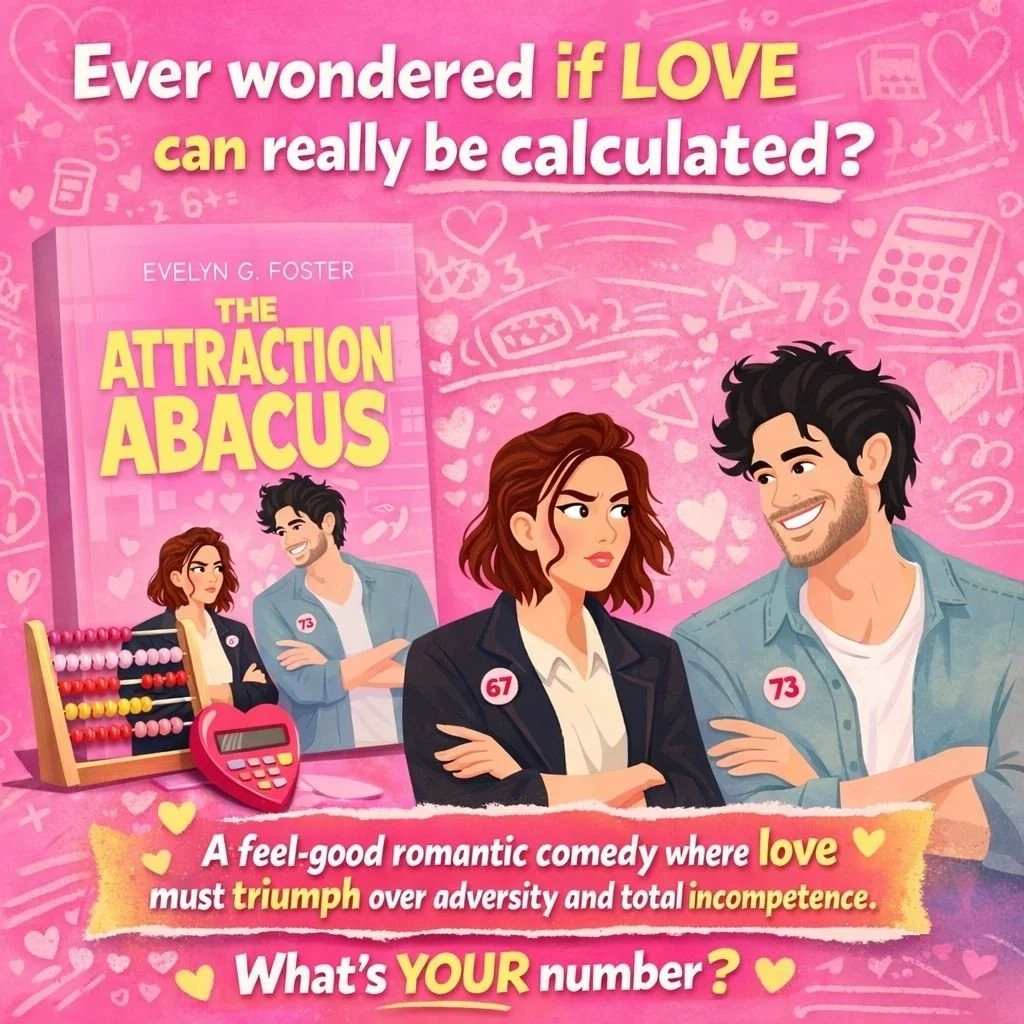
Ad: The Attraction Abacus. Romance with a difference!
Watch for the spice bait-and-switch
BookTok loves a heat-level headline. Fair enough. Readers want to know what they're getting. But spice is one of the easiest things to exaggerate because people use the same language for very different books.
"So spicy" might mean multiple explicit scenes. It might also mean one decent chapter and a lot of strategic camera panning. Likewise, "closed door" can mean sweet and emotionally rich, or it can mean the chemistry never quite gets off the ground. Neither is inherently better. The issue is mismatch.
If reviewers only talk about spice, ask yourself what they're not saying. Is there anything about the characters, pacing, emotional stakes, or writing style? A romance that relies entirely on "you won't recover from chapter 23" is asking a lot from chapter 23.
Check whether the tears are earned
BookTok has a flair for emotional exaggeration. Everyone is apparently throwing up, screaming, weeping, staring at walls. Sometimes fair. Sometimes a bit performance studies.
If a romance is being sold on devastation, look for what kind of emotional experience it actually offers. Is it tragic? Cathartic? Bittersweet? Is the pain romantic pain, family pain, trauma backstory, or third-act breakup nonsense stretched past its natural life? Crying is not a genre descriptor. It's barely a clue.
This matters because a lot of readers go in expecting a swoony romance and get an emotionally heavy novel with romance elements, or the reverse. One person's healing and heartfelt is another person's slightly manipulative playlist caption.
The difference between buzz and actual fit
The smartest way to figure out how to spot BookTok romance hype is to stop asking whether a book is good and start asking who it is good for. Viral books often are good. They are just not universally good, despite what the For You Page would like you to believe at 11.47 pm.
A useful review tells you the reader profile. Is this for people who love slow-burn yearning and do not mind waiting? Is it for readers who want high chemistry and low angst? Is it more "chaotic dating in your thirties" than "perfect fantasy boyfriend in a suit"? Does it lean cosy, dramatic, glossy, cynical, earnest, or a bit unhinged in a fun way?
Once you know your own reading taste, hype gets easier to decode. If you love low-to-no spice with crackling tension, a book trending because of its explicit scenes may not be your best bet. If you want emotional maturity and adult communication, the book being praised for a jealous alpha hero who growls a lot may be a sign, not a temptation.
Read the negative reviews properly
This is the least glamorous and most effective trick. Don't just skim the five-star gush. Read a couple of three-star and two-star reviews from people who explain themselves.
Negative reviews often reveal the exact thing you need to know: whether the pacing drags, whether the male lead is charming or exhausting, whether the humour lands, whether the book is genuinely romantic or just sexually charged. Better still, they tell you whether the supposed flaw is actually your catnip. A complaint like "nothing happens, it's all longing" is either a warning or a sales pitch, depending on your taste.
The goal is not to talk yourself out of every viral romance. It is to identify whether the backlash is about quality, preference, or expectation. Those are three different problems.
Pay attention to the language around the book
BookTok romance hype often reveals itself in the gap between the language used and the book that actually exists. If every caption is selling obsession, addiction, feral behaviour and ruined standards, but nobody can tell you what the relationship dynamic is, the marketing may be doing more work than the novel.
Look for grounded signals. Are people quoting lines because the writing is good, or are they quoting one spicy sentence in a loop? Are they talking about character growth, emotional payoff, and whether the couple make sense together? Or is the entire conversation orbiting around a tattooed man who says "good girl" twice?
No judgement - well, maybe a tiny bit. But repeatability is not the same as depth.
Sample pages still matter
This is wildly unsexy advice compared with dramatic reaction videos, but reading a sample solves half the problem. A lot of hype collapses on contact with the actual prose. If the voice grates, the dialogue feels forced, or the inner monologue sounds like recycled social captions, better to find out before you commit.
Romance is intimate reading. If you don't click with the voice, no amount of trending audio can save you. And if you do click, you may discover a hyped book actually deserves the noise. It does happen.
For readers trying to sort the genuinely fun, emotionally on-point romances from the algorithm's current favourite accessories, a bit of discernment goes a long way. That is partly why publishers like Heptagon Books pay attention to how readers really talk about tone, chemistry and payoff rather than pretending every popular book suits every reader.
Hype is not the villain
Some BookTok favourites are favourites for a reason. They are funny, swoony, compulsively readable, and exactly the right kind of emotionally messy. The problem is not hype itself. The problem is letting hype replace taste.
Treat BookTok as a starting point, not a verdict. Let it show you what is buzzing, then do the tiny bit of extra detective work that saves you from buying a "rom-com" that turns out to be 400 pages of workplace misery and one decent kiss. Your TBR is already chaotic enough.
The best romance pick is rarely the one everyone is shouting about. It's the one that sounds like your kind of trouble.
